Memory & Cognitive Support
Memory support without making life about memory loss.
Evergreen provides daytime support for older adults experiencing memory loss, mild cognitive impairment (MCI), Alzheimer’s disease and other forms of dementia.
But when someone walks through our doors, we don’t begin with a diagnosis. We begin with the person.
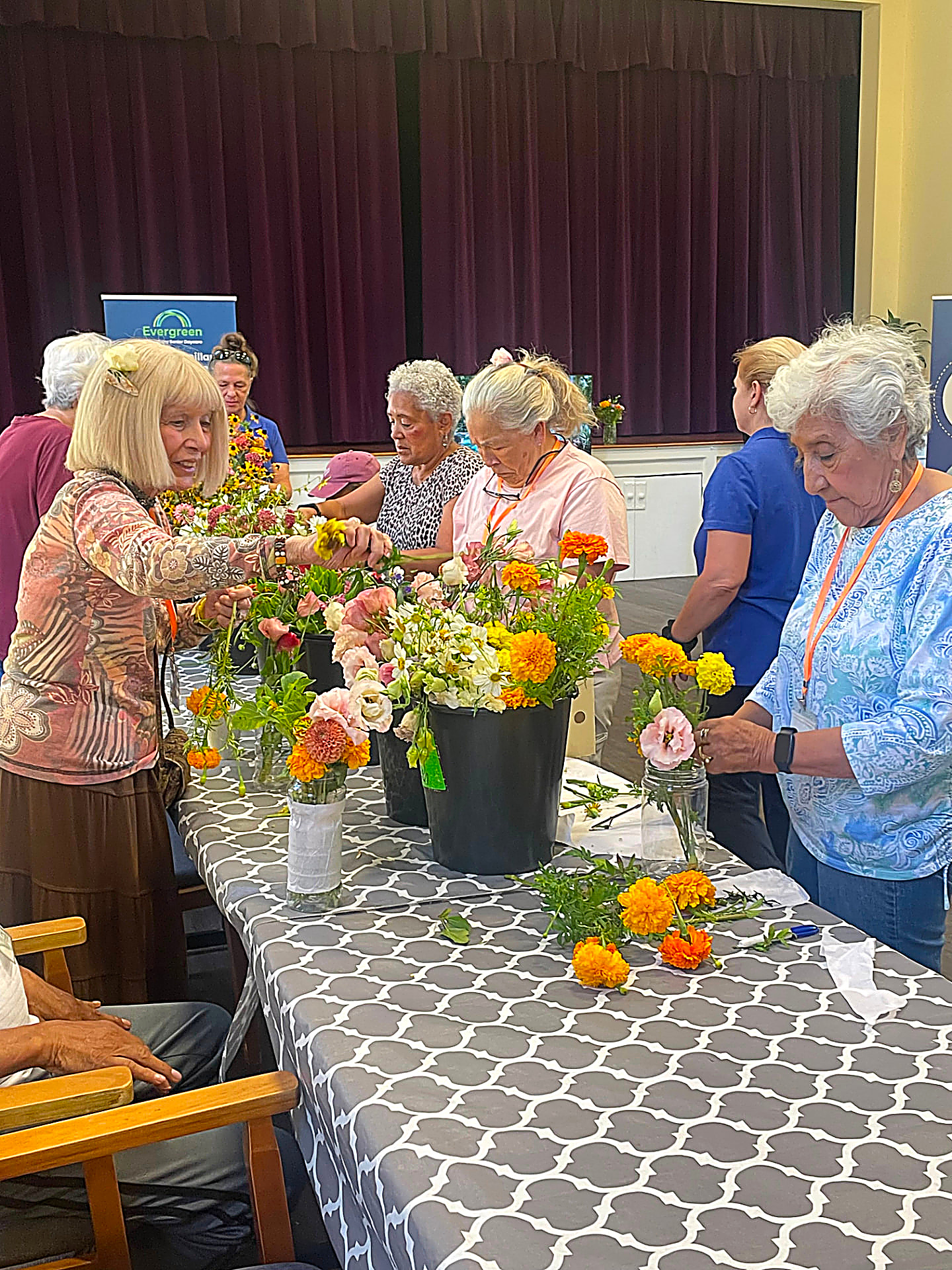
Who we support
Different memories. Same need to belong.
Members come to us living with mild cognitive impairment, early and moderate dementia, Alzheimer’s disease, and the other kinds of cognitive change that can arrive with age.
None of that is the interesting part. Two people can share a diagnosis and share almost nothing else — different temperaments, different histories, different tolerance for noise, different reasons to get out of the chair. One wants the discussion table. One wants the garden. One wants to sit near the music and be left alone for the first hour.
A diagnosis helps us understand how to support someone. It doesn’t tell us who they are.
So we spend the early days learning the second part, and we keep learning it. That is what makes dementia support at Evergreen feel less like a program and more like being known.
Wondering whether Evergreen might be right for someone you love?
Talk with our team →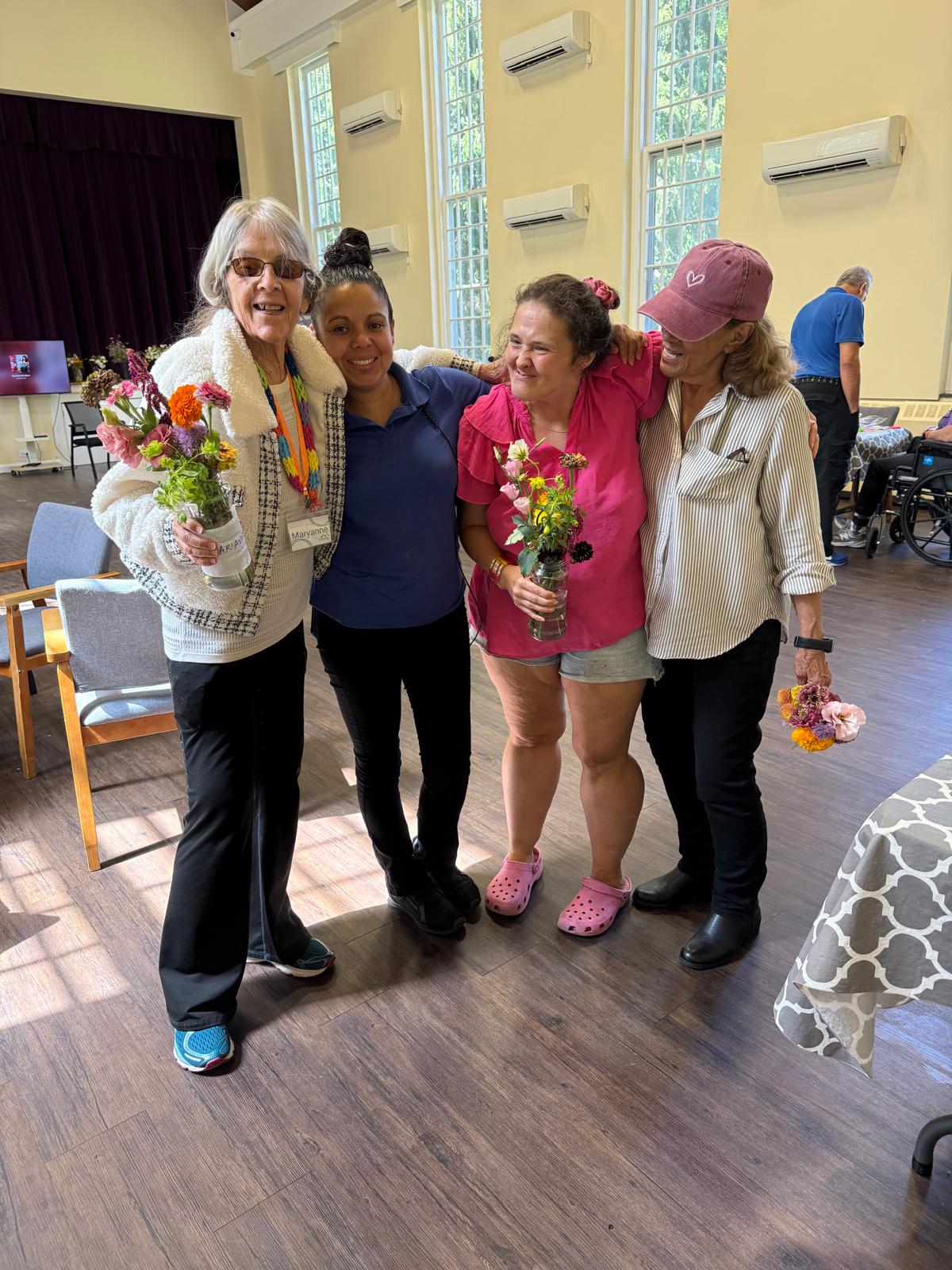
Engagement starts with who they are.
Before someone’s first full day, we ask about the ordinary things: what they did for work, who’s in the family, what they used to do on a Saturday, what they can’t stand, what time of day they’re at their best.
A retired teacher doesn’t stop being a teacher because her memory has changed — give her something to explain and watch what happens. A lifelong musician still knows exactly what a familiar song feels like. Someone who spent forty years cooking for a family may not remember the recipe and still light up the moment something starts happening in the kitchen.
We look for what remains meaningful rather than cataloguing what’s been lost.
Then we build the day around it — which is why the schedule runs several things at once instead of one activity everyone is expected to join.
How we support members
Meet them where they are.
Our team is trained in evidence-informed approaches to supporting people through cognitive change. They aren’t treatments. They’re practical ways our team helps members feel understood, capable and at ease.
01
Montessori approach to dementia care
Build around the abilities someone still has. Real roles, real choices, familiar routines, and activities with a point to them — folding, sorting, teaching, tending, setting the table. Independence wherever it's possible.
02
Validation Therapy
When someone's version of the day doesn't match ours, correcting them rarely helps and often stings. Our team listens for the feeling underneath — worry, urgency, missing someone — and responds to that instead.
03
Redirection
When someone becomes anxious, unsettled or fixed on one thought, staff can gently move attention toward something familiar and reassuring: a song they know, a task that needs doing, a walk to the garden with company.
Support throughout the day
Freedom to participate. Support when it’s needed.
Support at Evergreen is meant to be unremarkable — offered quietly, so it never becomes the thing the day is about.
- Supervision throughout the day
- Help navigating the studio
- Toileting reminders and assistance
- Support related to incontinence
- Medication reminders
- Mobility assistance
- Walkers, canes, wheelchairs and other assistive devices
- Support with confusion or exit-seeking
- Reassurance and gentle redirection
Every person is different. If you’re wondering whether Evergreen can support someone you love, the best place to start is a conversation.
Talk with us →It doesn’t feel like somewhere you’ve been sent.
Nobody at Evergreen is introduced by their diagnosis. There is no board with everyone’s condition on it, no wing for one group and a wing for another.
The day isn’t organized around being cared for. It’s organized around friends, music, movement, conversation, food, creativity, purpose, choice and a startling amount of laughter. Members pick what they join. Some throw themselves at the morning; some prefer to watch from a good chair with a coffee and arrive at the afternoon in their own time. Both are a perfectly good day.
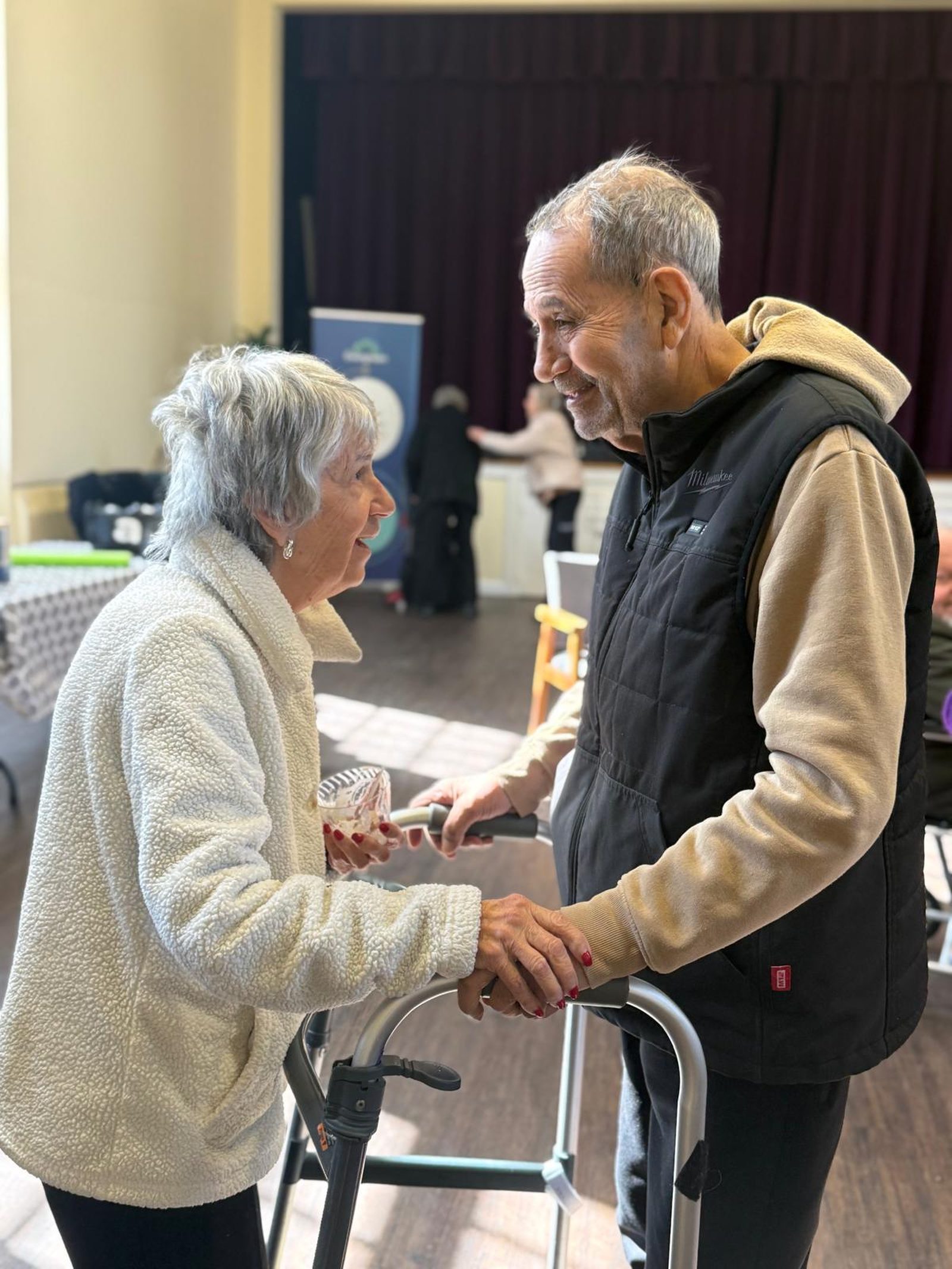
There is more to someone than what they can remember.
“I’m not going to a senior center.”
We hear this constantly. It’s usually not a refusal — it’s a reaction to the words.
Many people noticing changes in their memory don’t see themselves as someone who needs care, and being told otherwise is not a persuasive experience for anyone. The good news is that Evergreen doesn’t have to be introduced that way, because that isn’t what it is.
It’s a club. Somewhere to have breakfast, meet people, hear live music, get some exercise, work on something interesting, eat lunch at a real table, go somewhere on a Thursday, laugh, and be useful to someone.
So describe it in whatever language actually sounds like your parent. “Come look at this place with me.” “They have a lunch on Wednesdays.” “I want your opinion on it.” None of that is a trick — it’s an accurate description of the place, offered in a way that leaves their dignity intact. Most families come for a first visit together, which tends to settle the question faster than any conversation about it.
While you’re away
You shouldn’t have to wonder how their day went.
The Evergreen Snapshot is the daily update families receive — photographs, video and the highlights of the day — alongside regular conversation with our team about how someone is doing.
It isn’t a report. It’s a window into hours of your parent’s life you would otherwise never get to see.
Sent every evening, to every family.

Reimagining Senior Daycare
The Snapshot
Today’s edition
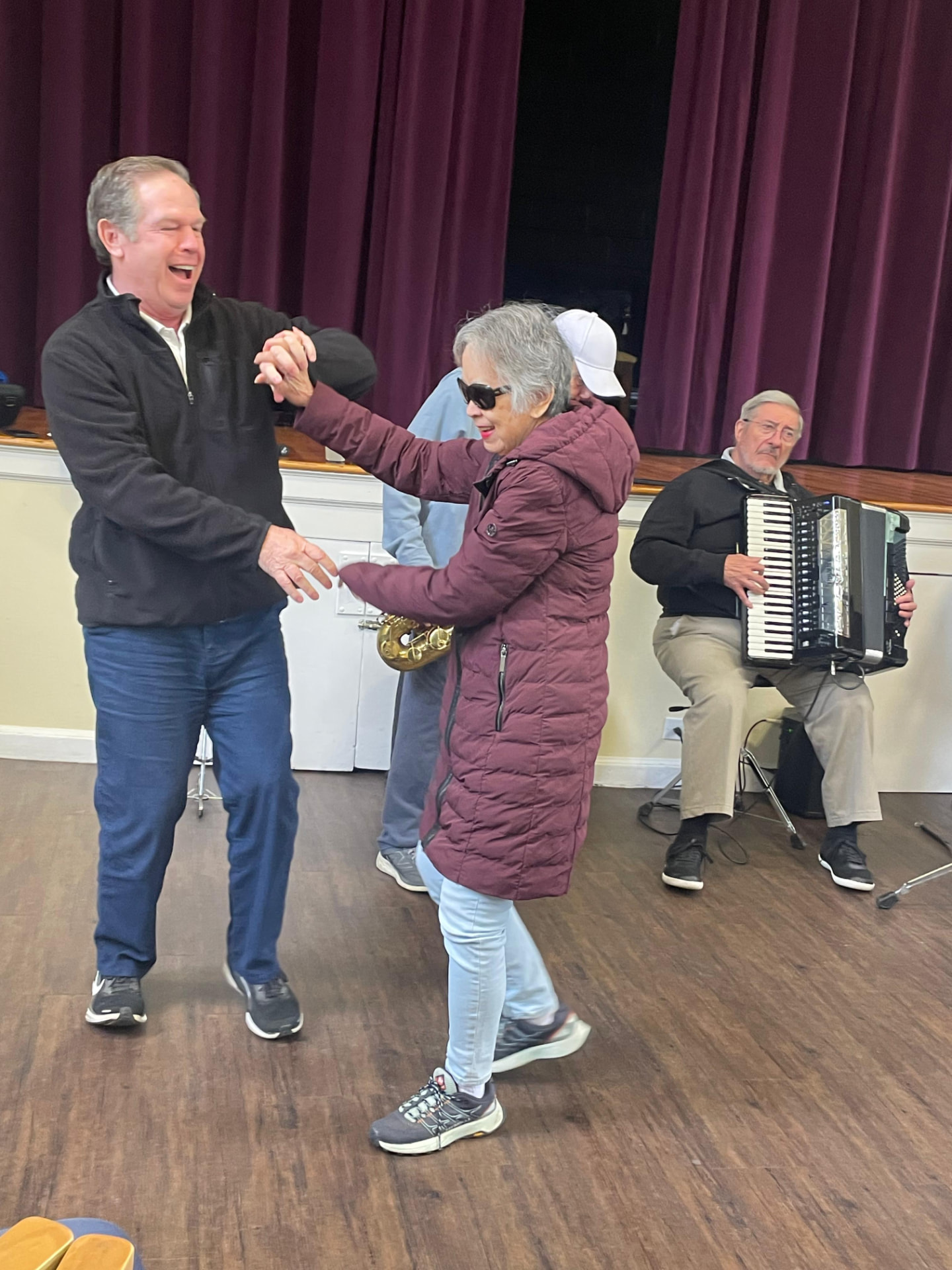
Today at Evergreen
- Dancing to live accordion, mid-afternoon
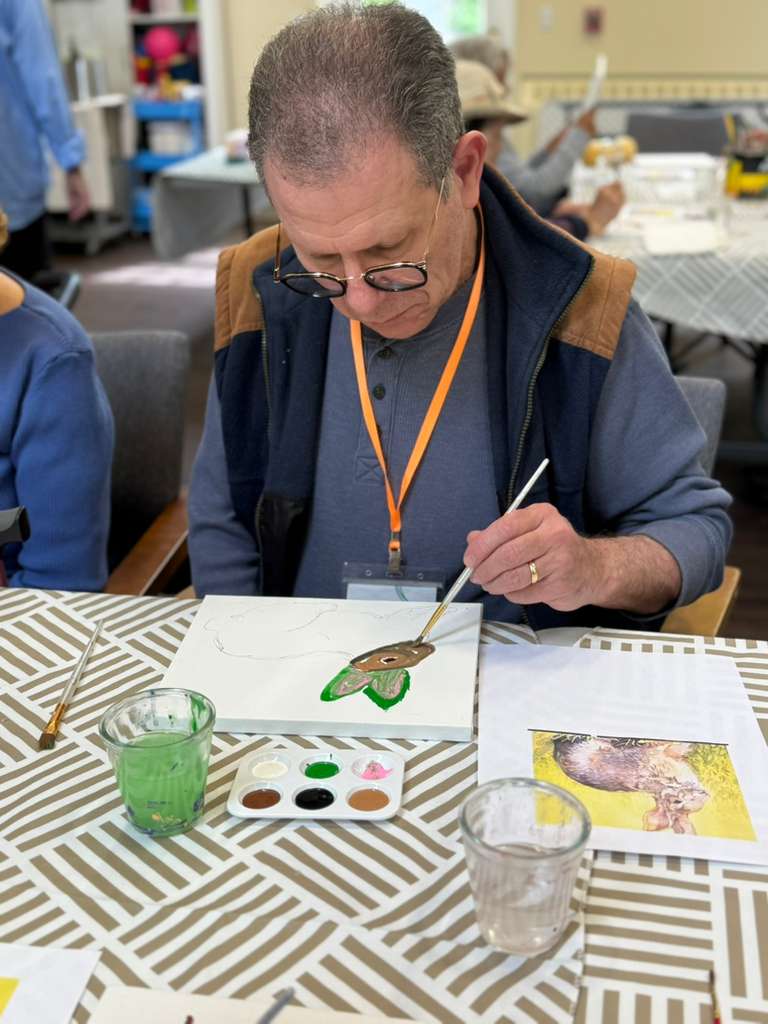
- Painting a hummingbird, one careful stroke at a time
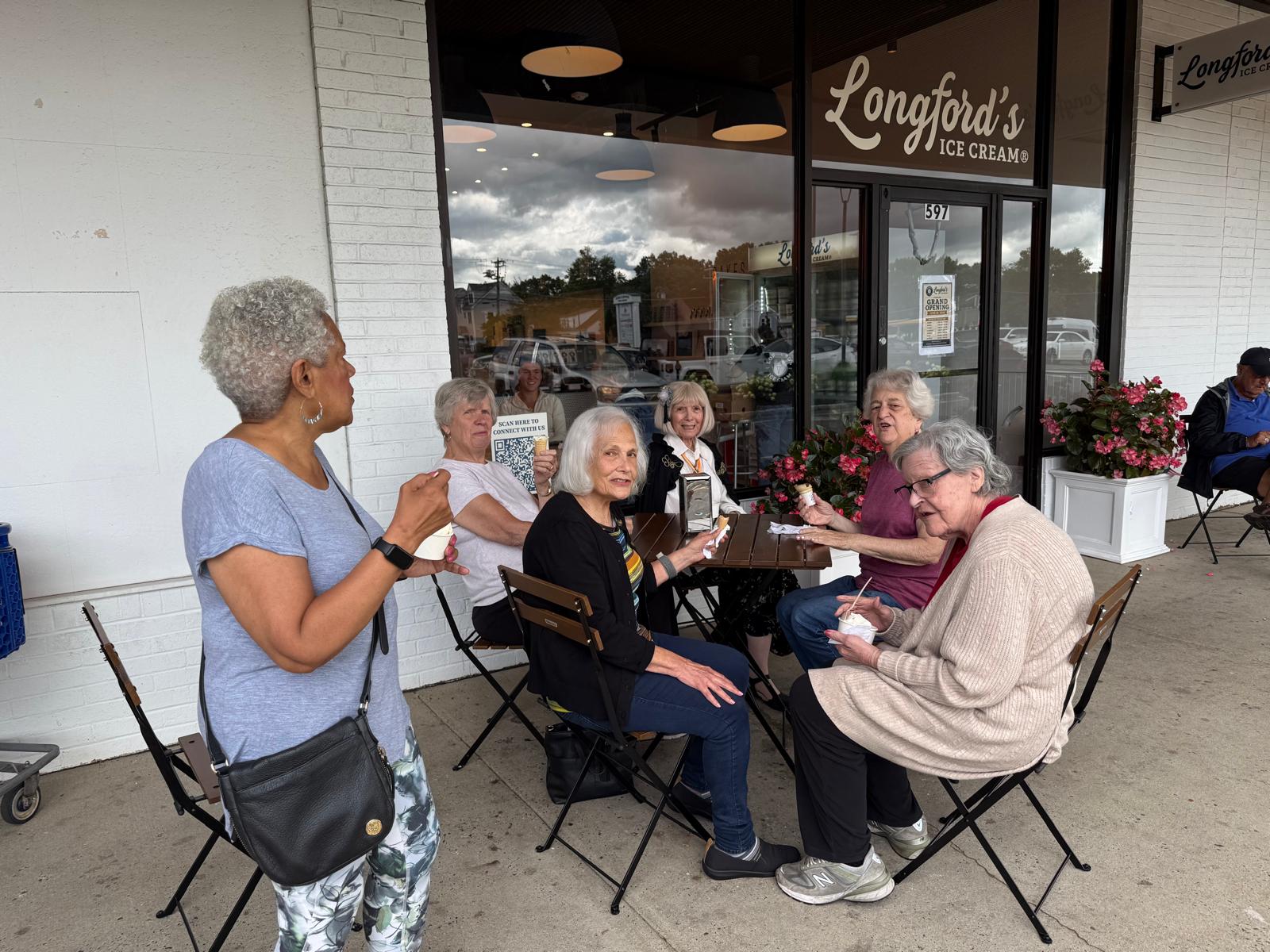
- Ice cream outside Longford's, the whole table talking
“She sang every word of the second song. We didn’t know she knew it.”
Photos & video inside
Evergreen Events →
For you, too
Their day at Evergreen gives you part of yours back.
Work. Appointments. Exercise. Groceries. Time with your own children. Lunch with a friend. Or a few hours in which you are simply not responsible for everything.
Evergreen is built to give members a day worth having and the people who love them a dependable one.
Most families settle into two, three or four days a week. Membership & pricing explains how the packs work, and optional door-to-door transportation can take the driving off your list. If you’re earlier in all this, our caregiver resources are a decent place to start.
Needs change. We’ll talk about them honestly.
Cognitive and physical needs shift over time, sometimes gradually and sometimes in a month. Our team notices those changes because they’re with members every day — how someone is participating, how they’re moving, what’s becoming harder — and we talk with families about them as they happen, rather than saving them up.
Usually that means adjusting: a different pace, a different room, more support at a particular moment of the day. Occasionally it means an honest conversation about whether Evergreen is still the right environment. Those are rare, and we’d rather have them openly, with you, than let a place quietly stop working for someone.
Our goal isn’t simply to keep someone enrolled. It’s to make sure Evergreen continues to be the right place for them.
From families
“The varied daily activities keeps my mom engaged and social. She is very happy when she comes home and says everyone is so nice!”
“The Evergreen staff is professional and genuinely passionate about their work and the well-being of their clients.”
Frequently asked questions
- What stages of dementia does Evergreen support?
- Members range from people living with mild cognitive impairment to those in the early and moderate stages of dementia. Because two people with the same diagnosis can need very different things, the honest answer for any one person comes from a conversation and a visit rather than a stage on a chart.
- Is Evergreen appropriate for someone with mild cognitive impairment (MCI)?
- Yes. Many members come to us early, when memory changes are noticeable but daily life is still largely their own. A structured, social day with people they enjoy is often exactly what feels missing at that point.
- Can someone with Alzheimer's disease attend Evergreen?
- Yes. Members living with Alzheimer's disease and other forms of dementia are part of the club. Our team adjusts how they support someone — cueing, familiarity, routine — without changing what the day is about.
- What is the difference between Evergreen and memory care?
- Memory care is residential: someone moves in and lives there. Evergreen is a daytime program. Members live at home with the people who love them, spend the day with us, and go home at the end of it.
- What is the difference between Evergreen and an adult day care program?
- Operationally, Evergreen is an adult day program. In feel, it's a social club — the day is built around friends, music, movement, conversation, food and choice, not around being looked after.
- Can Evergreen support someone who wanders or tries to leave?
- We can support members who experience confusion or exit-seeking. Staff are with members throughout the day, and they use reassurance and gentle redirection rather than confrontation. Whether we're the right fit for a particular person is something we'd talk through with you first.
- Can Evergreen help with toileting and incontinence?
- Yes. Our team can provide toileting reminders, assistance with toileting, and support related to incontinence, handled quietly and with dignity.
- Can members use walkers or wheelchairs?
- Yes. The studio accommodates walkers, canes, wheelchairs and other assistive devices, and staff can provide mobility assistance and help navigating the space.
- Does Evergreen provide medication reminders?
- We provide medication reminders during the day, handled discreetly as part of the ordinary rhythm of the day.
- What does someone with dementia actually do at Evergreen?
- The same things everyone else does: breakfast and conversation, music, movement, creative work, discussion, lunch at a real table, outings. What changes is how our team supports participation — not what the day contains. Daily Life walks through an hour-by-hour version.
- What if my parent doesn't want to attend an adult day program?
- That's one of the most common things we hear, and it's usually a reaction to the words rather than the place. Evergreen doesn't have to be introduced as care. It's somewhere to have breakfast, meet people, hear music and be part of something.
- How will I know what my loved one did during the day?
- Through the Evergreen Snapshot — daily updates with photographs, video and highlights from the day — plus regular conversation with our team about how things are going.
- How do I know whether Evergreen is right for my loved one?
- Tell us about them. We'll be honest about what we can support well and what we can't, and you're welcome to come see a day for yourself before deciding anything.
Come see what support can feel like.
Every person — and every family — is different. Come meet the team, tell us about someone you love, and experience Evergreen for yourself.
Evergreen Studio · 884 Newfield Ave, Stamford, CT 06905 · (203) 514-7450. Serving Stamford, Darien, Greenwich, New Canaan + surrounding areas.
Three ways in
Whenever you're ready.
Step 01
Book a tour
See the studio. Meet the team.
Choose a timeStep 02
Complimentary Day
A full day with us — on us. Meals, music, movement. No cost, no commitment.
Experience a Complimentary DayStep 03
Become a member
Join us with a 4-Visit, 10-Visit or 20-Visit Membership. Start whenever the timing is right.
See membership