
Family and friends
Sharing specific responsibilities with people who already know your loved one. Familiar company, and often the easiest place to start.
Caregiver Support
Caregiving rarely becomes overwhelming all at once. It usually begins with small things — checking in, a ride to an appointment, picking up a prescription, making sure there’s something in the refrigerator.
Then the calls come during the workday. Then there are more appointments, more errands, more hours spent finding something for them to do. Over time, those small things quietly become most of your week.
01
Most sons, daughters and spouses start by helping with a few things. Without ever deciding to, they end up as the:
And all of it happens alongside a career, children, a marriage, a home and their own responsibilities — none of which paused.
02
Bringing in outside support isn’t a step back from caring for someone. It can make caregiving more sustainable over time. Dependable hours give you time to:
Help doesn’t make caregiving smaller. It makes it more sustainable.
03
Caregiving changes the shape of a relationship. A daughter becomes a scheduler. A husband becomes a medication manager. A son becomes a chauffeur. A wife becomes the person responsible for everything.
When someone else is holding part of the week, there is room again for the relationship that came first — a lunch, a phone call, an afternoon that isn’t about logistics.
You are still their daughter. Their son. Their husband. Their wife.
04
There is no single right answer, and most families use more than one kind of support over time. Here is an honest sketch of the options.
Sharing specific responsibilities with people who already know your loved one. Familiar company, and often the easiest place to start.
One-on-one assistance in the person's own home — help with daily tasks, personal care and companionship on a schedule you set.
Structured activity, socialization, meals and supervision away from home during the day, with the person returning home each evening.
Temporary relief for family caregivers. Programs, availability and eligibility vary by community and by funding source.
Residential support, which may become the better option when someone's needs or circumstances change.
Different families need different things at different times, and these often work together. Evergreen is one part of that continuum — not a replacement for the rest of it.
05
Evergreen is a daytime program in Stamford built for two people at once: the member who spends the day with us, and the person at home who carries the rest of the week.
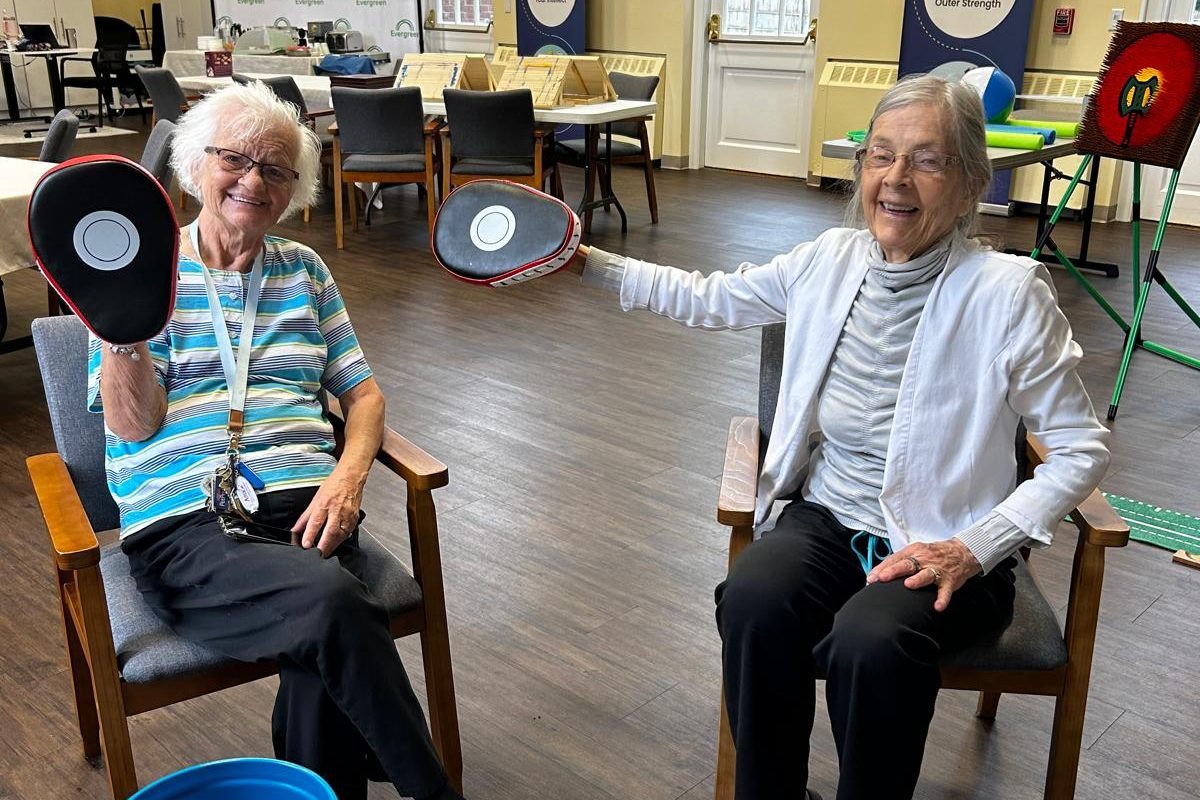
For your loved one
For you
Members arrive in the morning, spend the day with us, and go home in the evening.
The simplest way to know whether Evergreen is right for your family is to spend a day with us.
Questions about memory support? Memory & Cognitive Support · Paying for Care · Transportation