
The doctor says the word dementia.
Maybe it’s Alzheimer’s disease. Maybe it’s another form of cognitive impairment. Perhaps your family has been noticing changes for months, and the diagnosis simply confirms what you’ve suspected.
Even when you’re expecting it, hearing those words can change everything.
There are questions about medications, safety, driving, and what the future might hold. There are appointments to schedule, conversations to have, and decisions that suddenly feel urgent.
But there’s one question families don’t always think to ask:
What happens tomorrow?
Not five years from now. Not when your loved one needs more care.
Tomorrow morning, when your mother wakes up and wants her usual cup of coffee. When your father asks what’s planned for the afternoon. When your spouse wants to see friends, listen to music, or simply enjoy being around other people.
A diagnosis may change how someone experiences the world. But it doesn’t erase their personality, their interests, or their capacity to enjoy life.
And it certainly doesn’t mean the end of a good day.
For families navigating early dementia or Alzheimer’s disease in Stamford and surrounding Fairfield County communities, understanding how to preserve meaningful daily experiences can be an important part of the journey.
A Dementia Diagnosis Changes Things. But It Doesn’t Change Everything.
One of the most difficult aspects of an early dementia diagnosis is the uncertainty.
Families may begin focusing on what their loved one can no longer do.
Perhaps Mom has trouble remembering appointments. Dad repeats the same story several times. A spouse who once organized every family gathering now struggles to follow a complicated conversation.
These changes are real, and they deserve attention.
But focusing exclusively on what’s changing can obscure something equally important: the abilities, interests, and relationships that remain.
A retired teacher may still love discussing history.
Someone who spent decades cooking for family and friends may still enjoy preparing ingredients or sharing a meal.
A lifelong music lover may find tremendous pleasure in hearing a familiar song.
And someone who occasionally struggles to remember names may still enjoy the warmth of a conversation with a new friend.
The National Institute on Aging encourages caregivers to adapt activities to a person’s changing abilities while continuing to support participation in enjoyable experiences.
The objective isn’t to pretend that dementia doesn’t exist.
It’s to recognize that the diagnosis is only one part of the person.
Why Staying Engaged Matters When Someone Has Dementia
As cognitive abilities change, everyday activities can become more difficult.
Driving may no longer be appropriate. Organizing social outings can require more assistance. Familiar hobbies may become frustrating without some adaptation.
Over time, an older adult’s world can become smaller.
Not necessarily because they’ve lost interest in life, but because participating in it has become more complicated.
That’s why opportunities for social engagement, movement, music, and meaningful activities matter.
The Comfort of a Familiar Routine
For someone experiencing memory loss, predictability can be reassuring.
Knowing that breakfast is followed by conversation, movement, or a favorite activity can help make the day feel more manageable.
The Alzheimer’s Association explains that structured daily routines can help people living with dementia and their caregivers organize activities while making room for enjoyment and rest.
A good routine doesn’t need to be rigid.
It simply provides a familiar rhythm, with enough flexibility to accommodate how someone is feeling.
Music Can Create Moments of Connection
Music has a remarkable ability to bring people together.
A familiar melody might inspire someone to sing, tap their feet, smile, or share a memory.
Even when participating in other activities becomes challenging, music may remain a source of pleasure and connection.
At Evergreen Daytime Senior Care, music is a regular part of our programming.
Sometimes that means listening to live entertainment. Other times, it’s singing together, dancing, or simply enjoying a favorite song.
The goal isn’t to test anyone’s memory.
It’s to create an experience worth enjoying.
Movement Supports an Active Day
Physical activity remains important as people age, including for individuals experiencing cognitive changes.
Appropriate movement can support physical function, mobility, and general well-being.
At Evergreen, members participate in activities adapted to their interests and abilities, including gentle exercise and group movement.
Participation is encouraged, but never treated as a competition.
For some members, an energetic group activity is the highlight of the morning.
For others, a quieter form of movement may be more appropriate.
Conversation and Friendship Still Matter
A dementia diagnosis doesn’t eliminate the need to belong.
Older adults continue to benefit from companionship, shared experiences, and opportunities to contribute to conversations.
Sometimes, the most meaningful moments are the simplest.
A joke shared over breakfast.
A conversation about grandchildren.
A familiar face greeting someone by name.
These interactions are part of what makes a day feel full.
And they don’t require perfect memory.
What Does a Dementia-Friendly Day Actually Look Like?
When families hear the phrase dementia care, they may imagine a highly clinical environment.
But meaningful daytime support doesn’t always have to look or feel like medical care.
For individuals in the earlier and middle stages of dementia who can safely participate in a social setting, a thoughtfully designed adult day program may provide structure, companionship, and activities adapted to their abilities.
At Evergreen Daytime Senior Care in Stamford, Connecticut, our philosophy is simple:
We don’t begin with the diagnosis. We begin with the person.
Members aren’t defined by their cognitive abilities.
They’re individuals with unique personalities, preferences, experiences, and interests.
Our program is designed around those differences.
A Day Built Around Choice
Imagine arriving at Evergreen in the morning.
You’re welcomed by familiar faces and invited to enjoy breakfast.
Later, there might be several activities taking place.
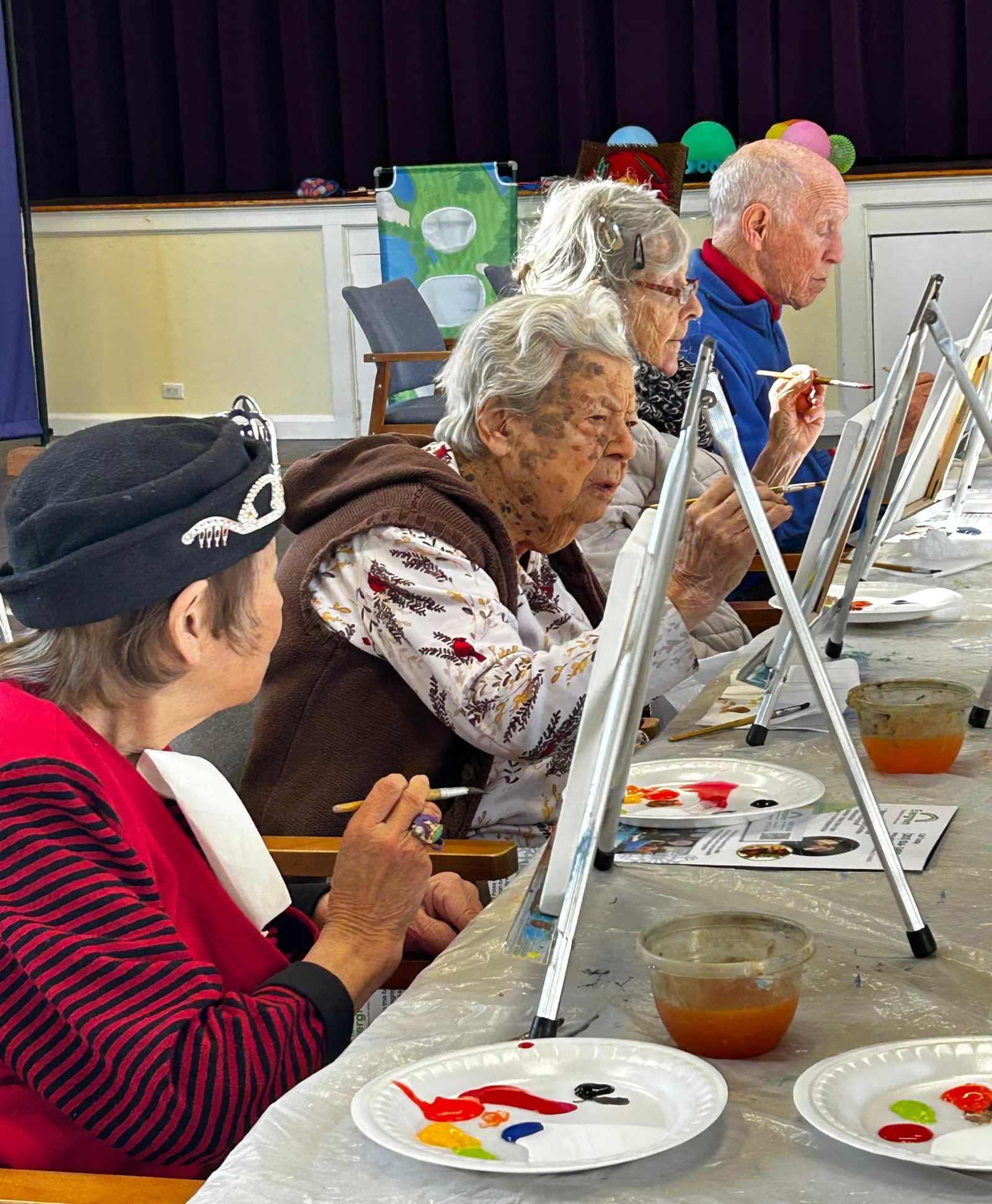
One group is discussing current events. Another is participating in an art project. Someone else is enjoying music or conversation.
Members can participate in activities that interest them, with encouragement and support when needed.
After lunch, the afternoon might include games, creative activities, group entertainment, or an outing.
Around 3 p.m., members gather for afternoon tea.
By late afternoon, it’s time to head home.
Throughout the day, the focus remains on friendship, enjoyment, and meaningful participation.
Support is available, but it doesn’t need to become the center of the experience.
See what a typical day at Evergreen looks like.
How Evergreen Supports Members Experiencing Dementia
People living with dementia can have very different needs, even when they share the same diagnosis.
One person may occasionally forget where they are.
Another may have difficulty following instructions.
Someone else may become anxious when routines change.
At Evergreen, our team receives dementia-specific training, including approaches informed by the Montessori Approach to Dementia Care and Validation Therapy, along with ongoing internal coaching.
These approaches help guide how we communicate, structure activities, and respond to individual needs.
The Montessori Approach: Focus on Abilities
The Montessori approach emphasizes meaningful participation, familiar routines, independence, and activities that build on abilities a person retains.
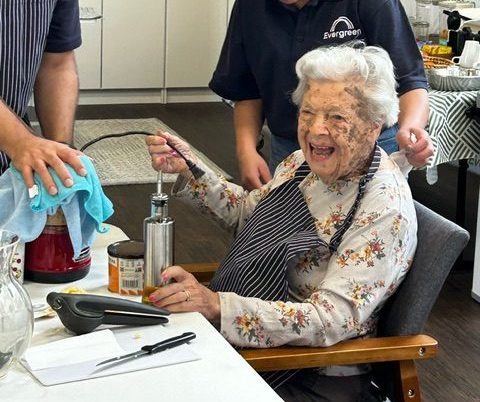
For example, someone who spent years caring for a home might enjoy arranging flowers, organizing materials, or helping prepare for an activity.
A former teacher might enjoy explaining something to another member.
The emphasis is on creating opportunities to participate and contribute.
Not simply keeping someone busy.
Validation Therapy: Understanding the Emotion
Sometimes, a person experiencing dementia may express confusion, anxiety, or a belief that doesn’t align with the present situation.
Rather than immediately correcting them, staff can focus on understanding the emotion behind what they’re expressing.
Someone who repeatedly asks to go home, for example, may be communicating discomfort, uncertainty, or a need for reassurance.
Listening carefully and responding with empathy can help preserve dignity and build trust.
Gentle Redirection and Individual Support
Our team also uses reassurance, familiar activities, and gentle redirection when members become unsettled.
Support is adapted to the individual.
The objective is to help members feel comfortable, capable, and included while maintaining a positive group environment.
These approaches are not medical treatments, and Evergreen does not provide clinical dementia care.
They are practical ways to support meaningful daily experiences.
Explore Memory & Cognitive Support at Evergreen for more about our team’s approach and the assistance available throughout the day.
The Other Person Affected by Dementia: The Caregiver
When someone receives a dementia diagnosis, the focus naturally turns toward their needs.
But dementia also changes life for the people who love them.
A spouse may gradually become responsible for managing appointments, meals, medications, and daily routines.
An adult child may find themselves balancing work, parenting, and caregiving.
And the responsibilities don’t necessarily end when the day is over.
Caregiving can become emotionally and physically exhausting.
The National Institute on Aging emphasizes the importance of caregivers protecting their own health and seeking support.
That support might include help from family members, professional caregivers, support groups, or adult day services.
A Good Day for Your Loved One Can Mean a Better Day for You
One of the benefits of an adult day program is that it can support both the participant and the family caregiver.
While a loved one enjoys activities, meals, and companionship, the caregiver has time to work, attend appointments, run errands, exercise, or rest.
At Evergreen, we also offer optional door-to-door transportation, including assistance from the member’s front door into the vehicle.
For families juggling multiple responsibilities, that additional support can make regular attendance more practical.
Learn about our door-to-door transportation services.
We also share our Evergreen Snapshot, a daily update featuring photographs, videos, and highlights of members’ experiences.
It’s a way for families to see some of the moments they might otherwise miss.
Caregiver relief isn’t an admission that someone can no longer manage.
It’s one way families can build a more sustainable support system.
Is Adult Day Care Appropriate for Someone With Alzheimer’s or Dementia?
For many families, this is the most important question.
The answer depends less on the diagnosis itself and more on the individual’s needs, abilities, and safety.
Evergreen welcomes older adults experiencing mild cognitive impairment, Alzheimer’s disease, and other forms of dementia, generally in the early to middle stages.
However, we don’t make enrollment decisions based solely on a diagnostic label.
Two individuals described as having moderate dementia may have entirely different abilities, behaviors, and support requirements.
That’s why we encourage families to begin with a conversation and a Complimentary Day.
During that visit, we have an opportunity to get to know the prospective member, understand their preferences, and observe how they engage with the Evergreen environment.
The family can also experience the program and meet our team.
Together, we can determine whether Evergreen is an appropriate fit.
When an Adult Day Program Is No Longer Enough
Dementia is progressive, and support needs can change over time.
For some individuals, a social adult day program can remain a valuable part of their routine for an extended period.
For others, increasing care needs may eventually require a different arrangement.
An adult day program may no longer be sufficient when someone requires continuous medical supervision, extensive personal care beyond the program’s capabilities, or a level of individual supervision that cannot be safely provided in a group environment.
Significant changes in mobility, behavior, or safety needs may also require reassessment.
These decisions should be made thoughtfully, involving the family, healthcare professionals, and care providers as appropriate.
At Evergreen, we believe in being transparent with families about what we can and cannot safely accommodate.
Our responsibility isn’t simply to keep someone enrolled.
It’s to help ensure they’re receiving the support they need.
Sometimes that means adapting how we support a member.
Other times, it means helping a family recognize when additional or different services may be appropriate.
Finding Dementia Day Programs in Stamford and Fairfield County
If you’re searching for adult day care for someone with Alzheimer’s disease or dementia in Stamford, Greenwich, Darien, New Canaan, Norwalk, or surrounding communities, there are several things worth considering.
Look for a program that:
Treats participants as individuals rather than diagnoses.
Provides meaningful activities adapted to different abilities.
Has staff trained in dementia-support approaches.
Offers a structured but flexible daily routine.
Communicates regularly with families.
Evaluates whether each participant can be safely supported.
Encourages families to visit and experience the environment.
The Alzheimer’s Association identifies adult day centers as a potential source of social engagement for people living with dementia and respite for their caregivers.
The right program should feel welcoming to your loved one and give you confidence in the support they receive.
There’s Still So Much Life to Enjoy
An early dementia diagnosis brings uncertainty.
There may be difficult decisions ahead, and the journey won’t always be easy.
But a diagnosis doesn’t mean that every day must revolve around memory loss.
There can still be music.
There can still be laughter.
There can still be friendships, shared meals, meaningful activities, and moments of genuine joy.
At Evergreen Daytime Senior Care, that’s what we work to create.
Not a place where people are defined by what they’ve lost.
A community where they’re recognized for who they are.
Experience a Complimentary Day at Evergreen
If someone you love is experiencing memory changes, Alzheimer’s disease, or another form of dementia, we’d welcome the opportunity to meet your family.
Our Stamford team will take time to understand your loved one’s needs, answer your questions, and help determine whether Evergreen is an appropriate fit.
We invite your loved one to experience a Complimentary Day, meet our members and staff, participate in activities, and discover what a day at Evergreen can feel like.
There’s no cost and no obligation to join.
Because even when memories change, a good day still matters.
Prefer to meet us first? Book a tour of our Stamford studio. You can also explore membership and pricing.
Questions families often ask
- Can someone with early dementia attend adult day care?
- Yes. Many adult day programs welcome individuals experiencing early dementia or mild cognitive impairment. Eligibility depends on the individual’s needs and the services the program can safely provide. Evergreen offers a Complimentary Day to help determine whether the program is a good fit.
- What activities are good for seniors with dementia?
- Music, gentle exercise, art, conversation, gardening, and familiar household tasks can provide opportunities for engagement and enjoyment. Activities should be adapted to the individual’s abilities, interests, and comfort level.
- Does Evergreen accept people with Alzheimer’s disease?
- Yes. Evergreen welcomes individuals living with Alzheimer’s disease and other forms of dementia, generally in the early to middle stages. Because needs vary significantly, our team evaluates each prospective member individually.
- Can adult day care help family caregivers?
- Yes. Adult day programs can provide structured daytime activities and supervision while giving family caregivers time to work, attend appointments, or rest. The level of support available varies by program.