
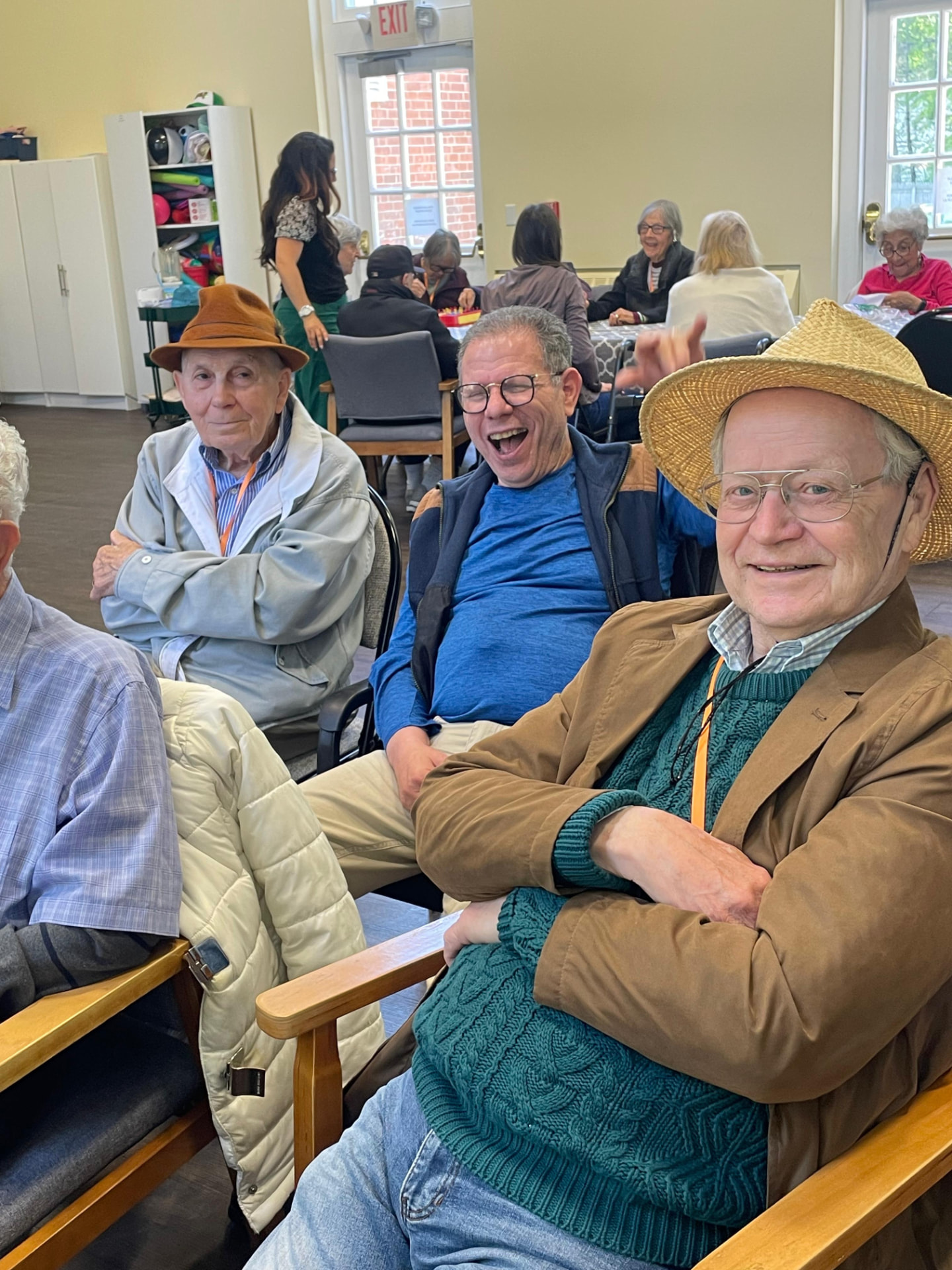
Sometimes, all it takes is a song.
At Evergreen Daytime Senior Care in Stamford, Connecticut, we’ve seen how music can change the atmosphere in a room.
A familiar Luciano Pavarotti aria begins to play, and someone gets goosebumps.
Joe Corsello’s band strikes up a tune, and members who were comfortably seated moments earlier are suddenly on their feet, dancing.
Other times, it’s a simple dance routine that turns an ordinary exercise session into something everyone looks forward to.
These moments happen regularly at Evergreen.
And they remind us of something important:
Music has a remarkable ability to bring people together, regardless of age or cognitive ability.
For older adults, music can be much more than entertainment. It can create opportunities for movement, self-expression, friendship, and meaningful connection.
That’s why music isn’t an occasional special event at Evergreen.
It’s part of nearly every day.
See what a day looks like: activities and daily programming at Evergreen.
Why Is Music So Powerful for Older Adults?
Think about a song you loved when you were younger.
Maybe it reminds you of your wedding, a summer vacation, a favorite concert, or dancing with someone special.
You might not have heard it in decades.
But when it starts playing, something happens.
You recognize the melody. You remember how it made you feel. Perhaps you even remember every word.
Music has a unique relationship with our emotions and memories.
And that connection doesn’t simply disappear as we get older.
Researchers have been studying how music affects the aging brain, including its potential benefits for people experiencing cognitive changes.
According to the National Institute on Aging, research suggests that participating in music and other creative activities may support emotional well-being, social interaction, and quality of life among older adults.
Read more: Could ‘Musical Medicine’ Influence Healthy Aging? (National Institute on Aging).
Scientists are continuing to investigate these effects, and evidence for lasting improvements in memory or cognition remains limited.
But one thing is easy to appreciate without a scientific study:
The joy of hearing a favorite song is meaningful in its own right.
Music and Dementia: Finding Connection Beyond Words
For families caring for someone living with Alzheimer’s disease or another form of dementia, music can be particularly meaningful.
As dementia progresses, communication may become more difficult.
Someone who once enjoyed long conversations might struggle to find the right words.
Another person may have difficulty following a group discussion or remembering recent events.
But music can offer a different way to participate.
The Alzheimer’s Association explains that familiar music may encourage engagement and self-expression, even when verbal communication has become challenging.
Read more: Music and Art Therapy for Alzheimer’s and Dementia (Alzheimer’s Association).
Some people living with dementia can continue singing familiar lyrics, tapping along to a beat, or responding emotionally to music.
Music may also help reduce agitation for some individuals, although responses vary and it is not a treatment for dementia.
At Evergreen, we see the value of these moments firsthand.
A member doesn’t need to remember the name of a singer to enjoy the performance.
They don’t need to explain why a song matters to them.
They can simply listen, smile, sing, or move to the music.
And sometimes, that’s more than enough.
Caring for someone with memory changes? Learn about our memory and cognitive support.
The Importance of Familiar Songs
Musical preferences are deeply personal.
For one person, a favorite opera performance might bring tears to their eyes.
For another, the sound of a big band might inspire them to dance.
Someone else might prefer the Beatles, Frank Sinatra, Motown, or the music they grew up hearing at home.
The key is recognizing that music should reflect the individual’s interests and experiences.
At Evergreen, we embrace a wide variety of musical styles because our members have equally varied backgrounds and preferences.
We don’t assume everyone enjoys the same music simply because they’re older.
The best musical experiences begin with knowing the person.
What Live Music Looks Like at Evergreen
Every two weeks, Evergreen welcomes live musical entertainment to our Stamford studio.
These performances are among the highlights of our programming.
Sometimes we have singers performing familiar favorites.
Other times, musicians bring the energy of a live band into the room.
When Joe Corsello’s band performs, the music often inspires members to get up and dance.
Some dance with one another. Others move alongside our team.
And those who prefer to remain seated can still enjoy the music, clap along, or sing.
The experience isn’t about putting on a performance for a passive audience.
It’s about creating an atmosphere where everyone feels welcome to participate.
More Than a Concert
Live music brings a special kind of energy to Evergreen.
Members recognize familiar songs, share stories, and sometimes discover that they have similar musical tastes.
A favorite tune can become the beginning of a conversation.
A dance can become a shared memory.
And a performance can give members something to look forward to throughout the week.
But perhaps the most important part is what happens between the songs.
The laughter.
The conversations.
The connections that develop naturally when people enjoy something together.
That’s what makes music such a valuable part of the Evergreen experience.
Music Isn’t Just for Special Occasions
While we feature live performances approximately every two weeks, music is part of our programming every day.
Some days, it’s karaoke.
Other days, it’s dancing, group singing, or a music-inspired exercise session.
We also incorporate music into movement activities, creating opportunities for members to stay physically active while having fun.
Turning Exercise Into Something Enjoyable
Let’s face it: not everyone looks forward to exercising.
But put on a familiar, upbeat song, and suddenly movement can feel less like a task and more like a celebration.
At Evergreen, a dance routine might include simple steps, rhythmic movements, or exercises adapted for members who prefer to remain seated.
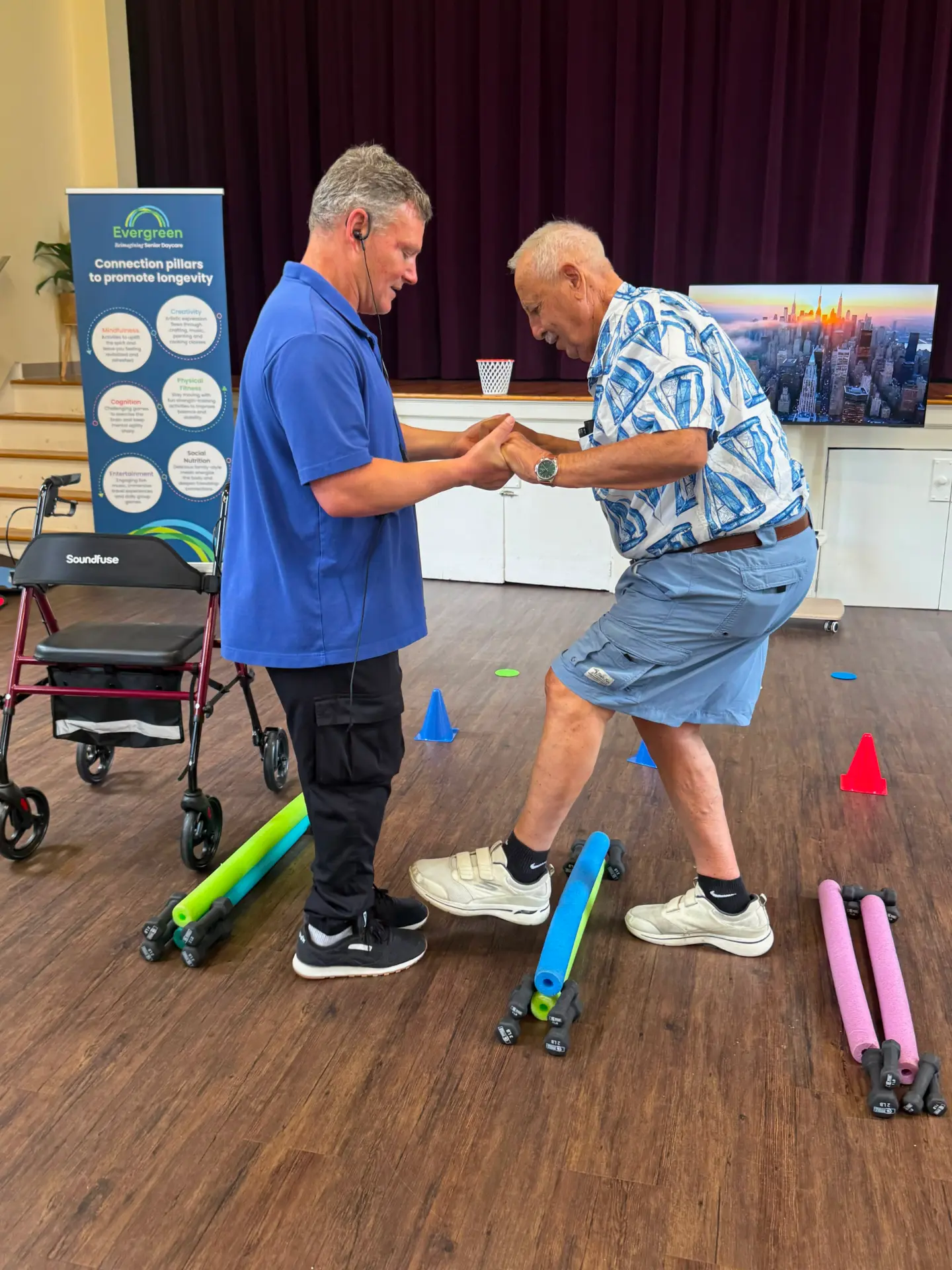
The emphasis is on participation, enjoyment, and movement appropriate to each person’s abilities.
For some members, that means getting up and dancing.
For others, it might mean moving their arms, tapping their feet, or clapping to the rhythm.
Everyone can participate in a way that feels comfortable.
Karaoke: It’s About Participation, Not Perfection
Karaoke is another favorite activity.
And the best part?
Nobody needs to be a professional singer.
Some members enthusiastically take the microphone.
Others sing along from their seats.
And sometimes, the entire room joins in.
Karaoke creates opportunities for laughter, self-expression, and shared enjoyment.
It also reminds us that growing older doesn’t mean losing the desire to have fun.
Five Ways Families Can Bring More Music Into Everyday Life
You don’t need a live band or a professional musician to create meaningful musical experiences at home.
A few thoughtful choices can make music a natural part of your loved one’s daily routine.
1. Create a Playlist of Their Favorite Songs
Start with music your parent or spouse genuinely enjoys.
Think about the songs they listened to when they were younger, artists they loved, or music associated with meaningful life events.
If possible, involve them in choosing the songs.
You might be surprised by what they remember or which songs they request.
2. Make Music a Shared Experience
Instead of simply turning on the radio in the background, spend a few minutes listening together.
Ask about the song.
Does it remind them of someone?
Did they ever see the performer live?
Was it popular when they were young?
Don’t worry if they don’t remember specific details.
The conversation itself, and the time spent together, can be meaningful.
3. Encourage Movement
If your loved one enjoys dancing, put on an upbeat song and invite them to move.
For someone with limited mobility, simple seated movements or clapping may be more appropriate.
Choose activities that match their physical abilities and comfort level.
The objective isn’t exercise intensity.
It’s creating an enjoyable opportunity to move.
4. Use Music to Create a Comfortable Routine
Music can help establish a pleasant rhythm throughout the day.
An upbeat playlist might accompany breakfast or a morning activity.
Softer music might create a relaxing atmosphere in the afternoon.
For individuals living with dementia, familiar routines can be reassuring.
Pay attention to how your loved one responds, and adjust the music accordingly.
5. Follow Their Lead
This may be the most important suggestion.
Not every song will produce a positive response.
Music can sometimes bring up sadness, difficult memories, or feelings of overstimulation.
If someone becomes uncomfortable, change the song, lower the volume, or turn the music off.
The Alzheimer’s Association recommends selecting familiar music, minimizing competing noise, and observing how the person responds.
The goal isn’t to make someone participate. It’s to create an opportunity for enjoyment.
Why Shared Musical Experiences Matter
At Evergreen, we often talk about the importance of social connection.
Music is one of the ways we help create it.
A member who is initially quiet might begin singing along.
Two people who don’t know each other well might discover that they love the same performer.
A group exercise session might turn into an impromptu dance party.
These experiences may seem small.
But they’re part of what makes a day meaningful.
For older adults who spend much of their time alone, opportunities to participate in shared activities can become increasingly important.
Music provides a natural reason to gather, interact, and enjoy one another’s company.
And unlike activities that require particular skills or abilities, music can often be adapted so that people with different interests, mobility levels, and cognitive abilities can participate.
It’s one of the reasons we make music such a consistent part of Evergreen’s programming.
Come Experience the Music at Evergreen
If you’re looking for engaging senior activities in Stamford, Greenwich, Darien, New Canaan, Norwalk, or surrounding Fairfield County communities, we invite you to discover Evergreen.
Our Stamford studio offers a welcoming daytime community where older adults enjoy meaningful activities, nutritious meals, friendship, and opportunities to participate in experiences they love.
Music is just one part of our programming.
But it’s a particularly joyful one.
From live performances and karaoke to dancing and musical exercise, we create opportunities for members to connect with one another every day.
See What’s Coming Up at Evergreen
We regularly welcome live entertainers and musicians to our studio.
Visit our Events Calendar to see upcoming concerts, performances, and activities.
See upcoming concerts and performances on our Events page.
Whether your loved one enjoys opera, classic standards, popular music, or simply the energy of a room full of people singing together, there’s something special about experiencing music in good company.
Experience a Complimentary Day
The best way to understand Evergreen is to experience it.
We invite your loved one to join us for a Complimentary Day at our Stamford location.
They’ll have the opportunity to meet our members and staff, participate in activities, enjoy meals, and experience the warmth of the Evergreen community.
If there’s a musical performance or activity they’re particularly interested in, our team can help identify a suitable day to visit.
Because sometimes, the most memorable part of a day begins with a familiar song.
Prefer to meet us first? Book a tour of our Stamford studio.
Questions families often ask
- What are the benefits of music for older adults?
- Music can provide opportunities for emotional expression, social connection, movement, and enjoyment. Research suggests that musical activities may support well-being and quality of life among older adults, although long-term cognitive benefits remain under investigation.
- Can music help someone with dementia?
- Familiar music may encourage engagement, emotional connection, and self-expression for people living with dementia. Some studies also suggest that personalized music can help reduce certain behavioral symptoms. Music does not cure or reverse dementia.
- What types of music activities are good for seniors?
- Popular activities include group singing, karaoke, dancing, live performances, listening to familiar songs, and movement exercises accompanied by music. The best choices depend on the individual’s interests and abilities.
- Does Evergreen offer live music for seniors in Stamford?
- Yes. Evergreen Daytime Senior Care features live musical entertainment approximately every two weeks and incorporates musical activities into its daily programming.