
It often starts with a conversation around the kitchen table.
Maybe Mom has been spending more time alone. Dad has stopped participating in activities he once loved. Or a spouse who has been providing care for years is beginning to feel overwhelmed.
Eventually, someone says what everyone has been thinking:
“Maybe it’s time to look into assisted living.”
For families in Stamford, Greenwich, Darien, New Canaan, and Norwalk, that conversation can bring a complicated mix of emotions. There’s concern about safety, worry about loneliness, and the difficult question of whether a loved one can continue living comfortably at home.
But what if the choice isn’t simply between staying home alone and moving into assisted living? There’s another option that many families haven’t fully explored: adult day programs.
For older adults who don’t require around-the-clock care, these programs can provide meaningful social connections, engaging activities, nutritious meals, and a structured daily routine, all while allowing them to return to the comfort of home each evening.
Before making a major decision about assisted living, it’s worth understanding how this alternative works.
What does assisted living really mean?
Assisted living communities provide residential accommodations and varying levels of personal care and support for older adults. Depending on the community and an individual’s needs, services may include assistance with bathing, dressing, medication management, meals, housekeeping, and daily activities.
For many seniors, assisted living is an excellent choice. It can provide safety, companionship, and professional support when living independently becomes difficult.
However, moving into assisted living is also a significant life transition. It typically means leaving a familiar home, adjusting to a new environment, and accepting a different daily routine. For someone who has spent decades in the same house, surrounded by familiar belongings, neighbors, and memories, that transition can be particularly challenging.
There’s also the financial consideration.
How much does assisted living cost in Stamford, CT?
According to the 2025 CareScout Cost of Care Survey, the median cost of assisted living in Connecticut is approximately $9,118 per month, or more than $109,000 annually, for a private one-bedroom accommodation. Actual costs vary by community, location, and level of care. Families may also encounter additional charges for higher levels of assistance or specialized services.
For some households, assisted living is both appropriate and financially manageable. For others, the more important question is whether their loved one actually needs residential care, or whether the challenges they’re experiencing could be addressed while they continue living at home.
The alternative many families overlook: adult day programs
Imagine a different kind of day. Instead of spending eight hours alone at home, an older adult arrives at a welcoming community where familiar faces greet them.
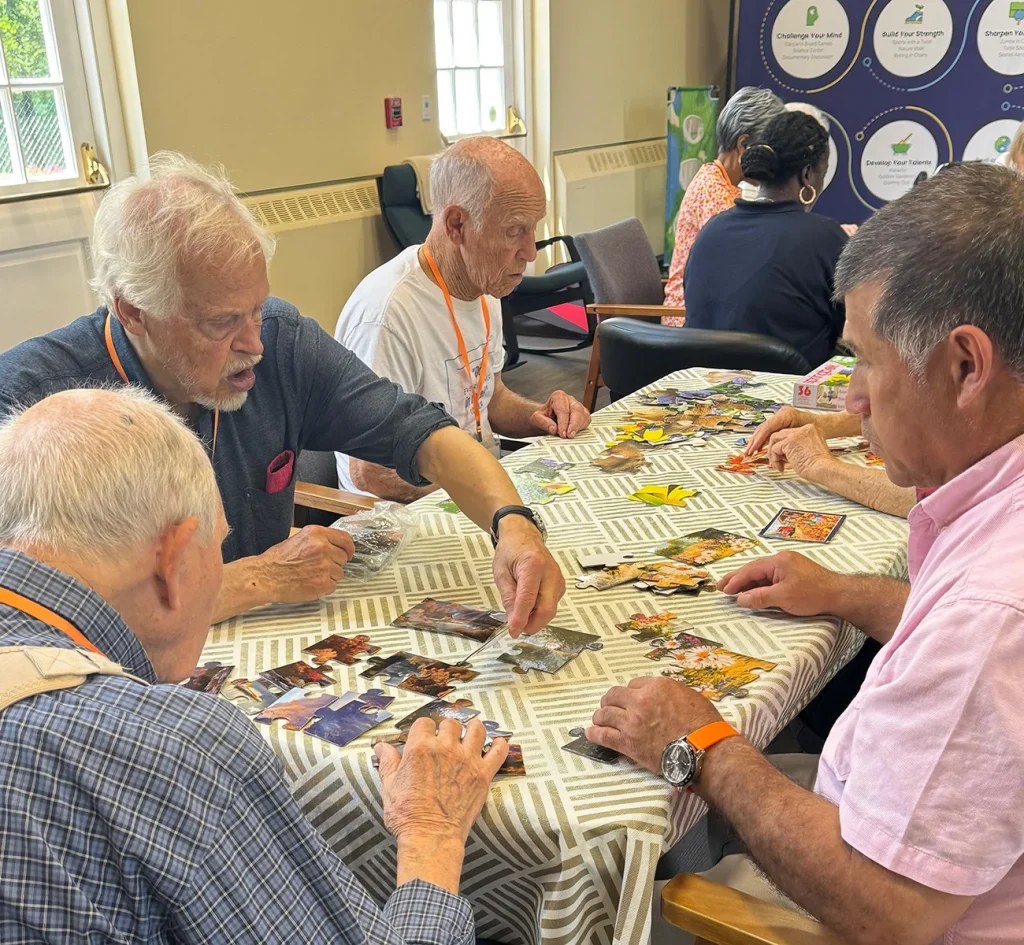
The morning might begin with breakfast and conversation, followed by gentle exercise, a creative activity, or a lively discussion about current events. After lunch, there might be music, games, an outing, or an opportunity to spend time with friends. By late afternoon, they return home, ready to share stories about their day over dinner.
That’s the idea behind a social adult day program: structured daytime engagement and support without requiring someone to move out of their home. Programs vary in their services and admission criteria. Some focus on medical or therapeutic needs, while others emphasize social engagement, recreation, and companionship.
At Evergreen Daytime Senior Care in Stamford, our approach centers on six pillars of connection:
- Cognitive Exercise: Activities that encourage thinking, curiosity, and mental engagement.
- Physical Exercise: Movement and activities adapted to members' abilities.
- Social Nutrition: Opportunities to develop friendships and meaningful relationships.
- Creative Expression: Music, art, and other opportunities for self-expression.
- Mindfulness: Activities that encourage relaxation and emotional well-being.
- Group Entertainment: Shared experiences that bring people together.
Our members enjoy a structured day that includes meals, activities, companionship, and opportunities to participate in outings. See what a day at Evergreen looks like.

For families, it can also provide something equally important: time to work, manage responsibilities, or simply recharge, knowing their loved one is participating in a supportive daytime community. And at the end of the day, everyone returns to their familiar routines at home.
Adult day programs vs. assisted living: what’s the difference?
Both options can support older adults and their families, but they serve different needs.
Living arrangements
Adult day program
Members continue living at home
Assisted living
Residents move into a community
Daily support
Adult day program
Structured daytime programming
Assisted living
Residential support, including overnight services
Social engagement
Adult day program
Group activities and regular companionship
Assisted living
Community activities and resident interactions
Meals
Adult day program
Typically provided during program hours
Assisted living
Generally included throughout the day
Personal care
Adult day program
Varies by program; may be limited
Assisted living
Assistance with daily living activities
Medical services
Adult day program
Varies; social programs are not medical care
Assisted living
Services vary; licensed care may be available
Caregiver relief
Adult day program
During scheduled program hours
Assisted living
Ongoing residential support
Cost structure
Adult day program
Often based on attendance days or packages
Assisted living
Typically monthly residential fees
Best suited for
Adult day program
Older adults who can safely live at home with appropriate support
Assisted living
Older adults who need residential assistance or supervision
| Consideration | Adult day program | Assisted living |
|---|---|---|
| Living arrangements | Members continue living at home | Residents move into a community |
| Daily support | Structured daytime programming | Residential support, including overnight services |
| Social engagement | Group activities and regular companionship | Community activities and resident interactions |
| Meals | Typically provided during program hours | Generally included throughout the day |
| Personal care | Varies by program; may be limited | Assistance with daily living activities |
| Medical services | Varies; social programs are not medical care | Services vary; licensed care may be available |
| Caregiver relief | During scheduled program hours | Ongoing residential support |
| Cost structure | Often based on attendance days or packages | Typically monthly residential fees |
| Best suited for | Older adults who can safely live at home with appropriate support | Older adults who need residential assistance or supervision |
The most important distinction isn’t simply cost. It’s the level of support an individual needs.
For someone who is safe at home but experiencing loneliness, inactivity, or a lack of daily structure, an adult day program may address the immediate problem without requiring a move. For someone who needs substantial assistance throughout the day and night, assisted living or another residential care setting may be more appropriate.
What does an adult day program cost in Stamford?
One advantage of adult day programs is that families can often choose how frequently their loved one attends. At Evergreen, we offer flexible membership packages for our Stamford studio:
| Membership | Package price | Cost per visit |
|---|---|---|
| 4 visits | $700 | $175 |
| 10 visits | $1,600 | $160 |
| 20 visits | $3,000 | $150 |
Membership visits do not expire, providing flexibility around appointments, travel, and family schedules.
For example, a family choosing a 10-visit package would pay $1,600 for approximately two days of attendance per week over five weeks. A family using 20 visits over approximately four weeks would pay $3,000 for daytime programming. Compare that with Connecticut’s median assisted living cost of approximately $9,118 per month.
The difference can be substantial, although these services are not directly interchangeable. Assisted living includes residential accommodations and a broader range of support. Families using adult day programs must still account for housing, evening and overnight care, and any additional assistance needed at home.
The financial advantage is most meaningful when an older adult can already live safely at home but would benefit from greater daytime engagement and support. For those families, adult day programming may provide an appealing combination of flexibility, companionship, and value. For help with costs, see paying for care in Connecticut.
Five questions to ask before choosing assisted living
Every family situation is different. Before deciding that residential care is necessary, consider these five questions.
1.Is my loved one unsafe at home, or simply spending too much time alone?
Loneliness and isolation can become serious concerns as people age. But loneliness doesn't automatically mean someone needs residential care.
If your loved one is generally safe at home but lacks social interaction, a structured daytime program may provide the connection and stimulation they're missing.
If there are significant safety concerns, such as wandering, frequent falls, or an inability to manage essential daily activities, a more comprehensive care assessment may be necessary.
2.Does my loved one need help around the clock?
This is one of the most important distinctions. Adult day programs operate during designated hours. They do not replace overnight supervision or continuous personal care.
If your loved one can safely spend evenings and nights at home, with appropriate family or professional support, daytime programming may be a practical solution.
If they require continuous supervision, assisted living, memory care, or another care arrangement may be more appropriate.
3.Would more social interaction improve their daily life?
Consider how your loved one currently spends their days. Are they watching television for hours? Have they stopped seeing friends? Are they reluctant to leave the house?
A welcoming social environment can create opportunities for conversation, movement, laughter, and meaningful participation.
Sometimes, what appears to be a growing need for residential care is partly a need for more connection and structure.
4.How much support does the family caregiver need?
Caregiving can be deeply rewarding, but it can also be exhausting. Spouses and adult children frequently balance caregiving with work, family responsibilities, and their own health.
An adult day program can provide predictable periods of relief, allowing caregivers to attend appointments, work, run errands, or rest.
That support can make an important difference in a family's ability to sustain a home-based care arrangement.
5.What does my loved one actually want?
Older adults should have a meaningful voice in decisions about their care whenever possible. Some may welcome the idea of moving into a residential community. Others may feel strongly about remaining in their own homes.
Before making a permanent change, consider whether there's an opportunity to try a less disruptive option.
A Complimentary Day at an adult day program can help families understand whether the environment feels comfortable, engaging, and appropriate.
When assisted living is the right choice
Adult day programs aren’t the answer for everyone. And families shouldn’t feel pressured to delay residential care when it’s genuinely needed.
Assisted living may be a better choice when someone requires regular assistance with essential daily activities, needs support beyond daytime hours, or can no longer remain safely at home with available services. For individuals with more advanced dementia, significant wandering risks, or complex medical needs, specialized memory care or nursing care may be necessary. A professional assessment can help determine the appropriate level of support.
The goal should never be to avoid assisted living at all costs. The goal is to find the right environment for each person’s needs, preferences, safety, and quality of life.
Sometimes that’s assisted living. Sometimes it’s remaining at home with additional services. And sometimes, an adult day program can help bridge the gap.
Discover another way to spend the day in Stamford
At Evergreen Daytime Senior Care, we believe that growing older shouldn’t mean growing isolated. Our Stamford studio brings older adults together for meaningful activities, delicious meals, friendship, and shared experiences.
We welcome members with a range of abilities, including individuals experiencing mild cognitive impairment or certain stages of dementia, provided our program can safely meet their needs. Learn more about our memory and cognitive support.
Families from Stamford, Greenwich, Darien, New Canaan, Norwalk, and surrounding communities are invited to learn more. Whether you’re just beginning to explore senior care options or actively considering assisted living, we’d welcome the opportunity to show you another possibility.